
Sequoyah County District Court Overview
Oklahoma's trial court of general jurisdiction is the District Court, and every county in the state has one. General jurisdiction means the court can hear almost any matter that state law allows. In Sequoyah County that covers civil suits of any dollar amount, felony and misdemeanor criminal cases, divorce and other family proceedings, probate and guardianship, juvenile cases, traffic charges filed by the state, and small claims. The same court also issues marriage licenses and search warrants.
Records for all of this work are kept by the Court Clerk, who files and permanently maintains District Court proceedings. The Court Clerk works with the civil, probate, juvenile, domestic relations, and small claims divisions of the court. Because Oklahoma splits its local records duties, land records and recorded instruments are kept by a different office, the County Clerk, rather than by the District Court.
Most people reach these records through the statewide online portals before they ever visit the courthouse. The District Court still controls the official file, so anything the public portals do not show can be requested from the Court Clerk in person or by phone.
The 15th Judicial District and Its Judges
Sequoyah County District Court sits in Oklahoma's 15th Judicial District. The district groups five counties together: Sequoyah, Adair, Cherokee, Muskogee, and Wagoner. Judges within the district can be assigned across these counties, but each county keeps its own courthouse and its own clerk.
Three judges serve the Sequoyah County bench. District Judge Jeffrey J. Payton was elected District Judge for the 15th Judicial District in 2007 and serves as Chief Judge for Sequoyah and Adair Counties. He started as a Special District Judge for the district in 2001, was admitted to the Oklahoma bar in 1992, and later served as Presiding Judge for the East Central District. Associate District Judge Kyle E. Waters and Special Judge Matt Orendorff round out the local judiciary. Associate and special judges often handle a heavy share of family, probate, small claims, and preliminary criminal matters, which keeps the felony and major civil docket moving.
The county publishes a short profile for the associate judge, and that Associate District Judge page identifies Kyle E. Waters and the duties tied to the seat.
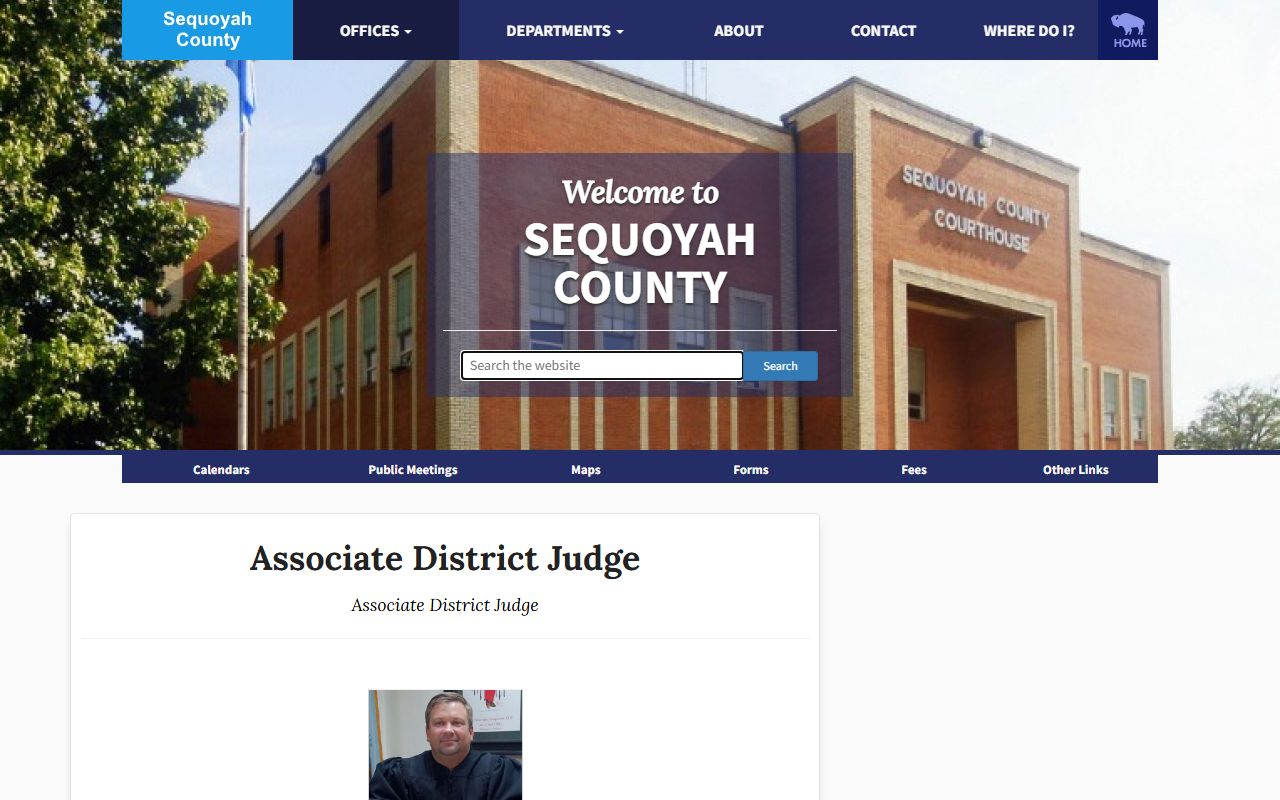
The associate judge typically presides over a large slice of the everyday docket, so litigants in family or small claims cases often appear before that seat rather than the chief district judge.
The special judge handles many of the early-stage hearings and assigned dockets. The official Special Judge page names Matt Orendorff in that role.
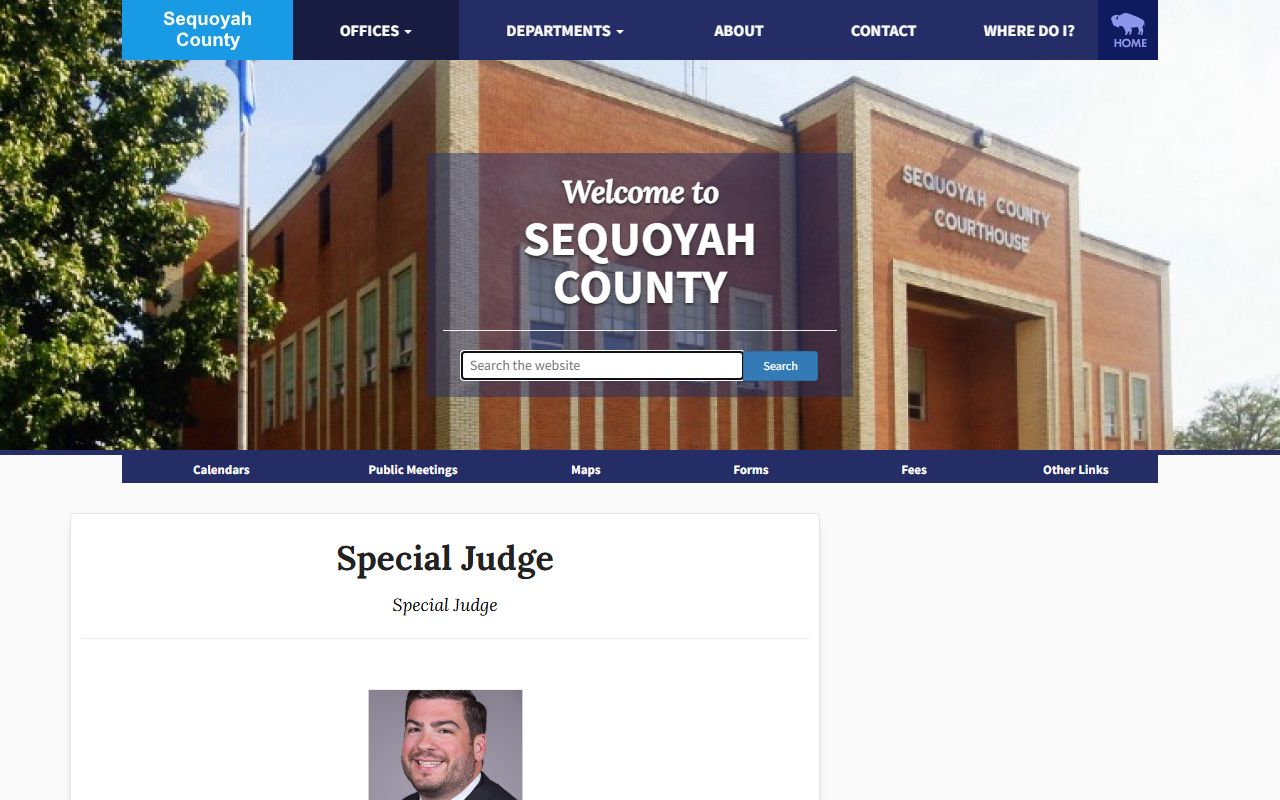
Special judges are appointed within the district and take on dockets the presiding judge assigns, which is why a case file may list more than one judge over its life.
Sequoyah County District Court Judges and Offices
The trial court, its judges, and the nearby city court all operate out of Sallisaw, the county seat. The table below lists each office, what it handles, and where to reach it. The District Court and its records counter share the courthouse, while the Sallisaw Municipal Court keeps a separate building for city matters.
| Court / Office | Role | Address / Contact |
|---|---|---|
| Sequoyah County District Court / Court Clerk | Civil, criminal, probate, juvenile, domestic relations, small claims, marriage license, traffic, and court cost records | 120 E. Chickasaw Ave., Suite 205, Sallisaw, OK 74955; 918-775-4411 |
| District Judge Jeffrey J. Payton | District judge and chief judge for Sequoyah and Adair Counties | Courthouse, 120 E. Chickasaw Ave., Sallisaw, OK 74955 |
| Associate District Judge Kyle E. Waters | Associate district judge | Courthouse, 120 E. Chickasaw Ave., Sallisaw, OK 74955 |
| Special Judge Matt Orendorff | Special judge | Courthouse, 120 E. Chickasaw Ave., Sallisaw, OK 74955 |
| Sallisaw Municipal Court | Municipal ordinance, municipal traffic and citation, juvenile ordinance violations | Court at 113 N. Elm St., Sallisaw, OK 74955; 918-775-6241 |
Note: court office hours and judge assignments can change, so confirm the right division with the Court Clerk before a hearing or a records visit.
What the Sequoyah County District Court Hears
The District Court is built to take in a wide range of cases, and the case-type list used by the state search portals reflects that range. Each category carries its own file prefix, which helps when you search by case number.
- Criminal felony and misdemeanor cases, plus criminal probable cause and search warrant filings.
- Civil suits over $10,000 and under $10,000, along with tax liens and other civil matters.
- Family and domestic cases, including divorce, paternity, child support, and protective orders.
- Probate, guardianship, conservatorship, trust, and will filings.
- Small claims under $6,000 and traffic cases filed by the state.
- Juvenile cases, which are commonly confidential under Oklahoma law.
- Marriage license records, which the Court Clerk issues and keeps.
Not every category is open to the public in full. Juvenile, adoption, mental health, and sealed or expunged files are restricted, and the public docket may show only limited information or nothing at all. The court redacts sensitive identifiers such as full Social Security numbers even on otherwise public files.
How a Case Moves Through the System
A case usually starts in the District Court and ends, if it is appealed, at one of Oklahoma's two top courts. The path splits depending on whether the matter is criminal or civil. The flows below trace the typical stages a Sequoyah County file moves through before any appeal.
Criminal flow: Arrest › First Appearance › Information or Indictment › Arraignment › Preliminary Hearing › Pretrial › Plea or Trial › Sentencing › Oklahoma Court of Criminal Appeals
Civil flow: Petition Filed › Answer › Discovery › Pretrial › Trial › Judgment › Oklahoma Supreme Court / Court of Civil Appeals
Most cases never reach an appeal. They close at a plea, a dismissal, a settlement, or a judgment in the District Court. The docket entries for each stage are what the public portals display, so a file can be tracked from its first filing to its disposition.
The Appeals Path from Sequoyah County District Court
Oklahoma is unusual because it has two courts of last resort. Civil appeals and criminal appeals travel different routes once they leave the District Court.
Civil appeals go to the Oklahoma Supreme Court, which is the civil court of last resort and also decides challenges to state laws and constitutional questions. The Supreme Court may assign a civil appeal to the Oklahoma Court of Civil Appeals, an intermediate court that handles cases sent to it. Criminal appeals follow a separate track to the Oklahoma Court of Criminal Appeals, which is the final word on criminal matters in the state. A Sequoyah County felony conviction, for example, is reviewed by the Court of Criminal Appeals rather than the Supreme Court.
The Oklahoma Bar Association keeps a plain-language explanation of this hierarchy on its CourtFacts site, which lays out how the District Courts sit below the appellate courts.
District Court vs. Municipal Court in Sequoyah County
Many people confuse the county District Court with the city court in Sallisaw. They are different courts with different jurisdiction, and they store their records separately. The District Court has broad authority over state-law cases, while the Sallisaw Municipal Court is a court of limited jurisdiction that handles only city ordinance and municipal traffic matters. The comparison below shows where each line of cases lives.
| Sequoyah County District Court | Sallisaw Municipal Court | |
|---|---|---|
| Jurisdiction | General, statewide trial court for the county | Limited, city ordinance only |
| Case Types | Felony, misdemeanor, civil, family, probate, juvenile, small claims, state traffic | City ordinance violations and municipal traffic citations |
| Where Records Live | Court Clerk, courthouse at 120 E. Chickasaw Ave. | Municipal Court, 113 N. Elm St.; clerk reached at 918-775-6241 |
| Online Lookup | Statewide ODCR and OSCN docket portals | City payment link; firm dates confirmed with the city clerk |
A speeding ticket written under a Sallisaw city ordinance is a municipal matter, while the same charge filed by a state officer can land in the District Court. Bench warrants for missing a municipal hearing also stay with the city court rather than the county. When in doubt about which court holds a citation, the citation number and the issuing agency point to the right venue.
The District Attorney in Sequoyah County District Court
Criminal cases in the District Court are brought by the District Attorney, not by the court itself. Sequoyah County falls in Oklahoma's District 27, which also covers Adair, Cherokee, and Wagoner Counties. The District Attorney decides which charges to file after an arrest, prosecutes the case, and represents the state through trial and sentencing. The Sequoyah County office sits in the same courthouse as the Court Clerk.
The county profiles the local prosecutor on its District Attorney page, which lists the Sallisaw office and its mission.
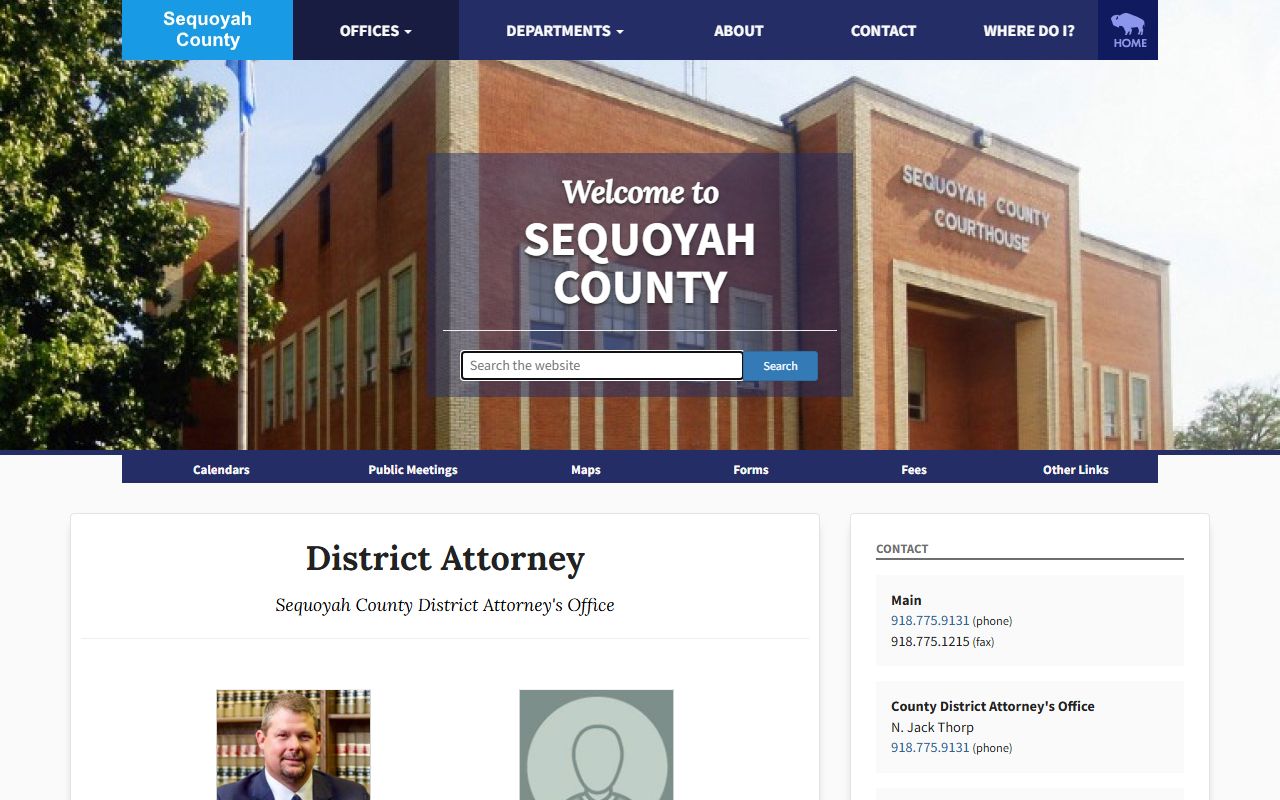
Because the prosecutor files the charges, the charging documents and any declined cases trace back to this office before they appear on a public docket.
The statewide District Attorneys Council also maintains a District 27 page that confirms the counties served and the Sequoyah courthouse office.
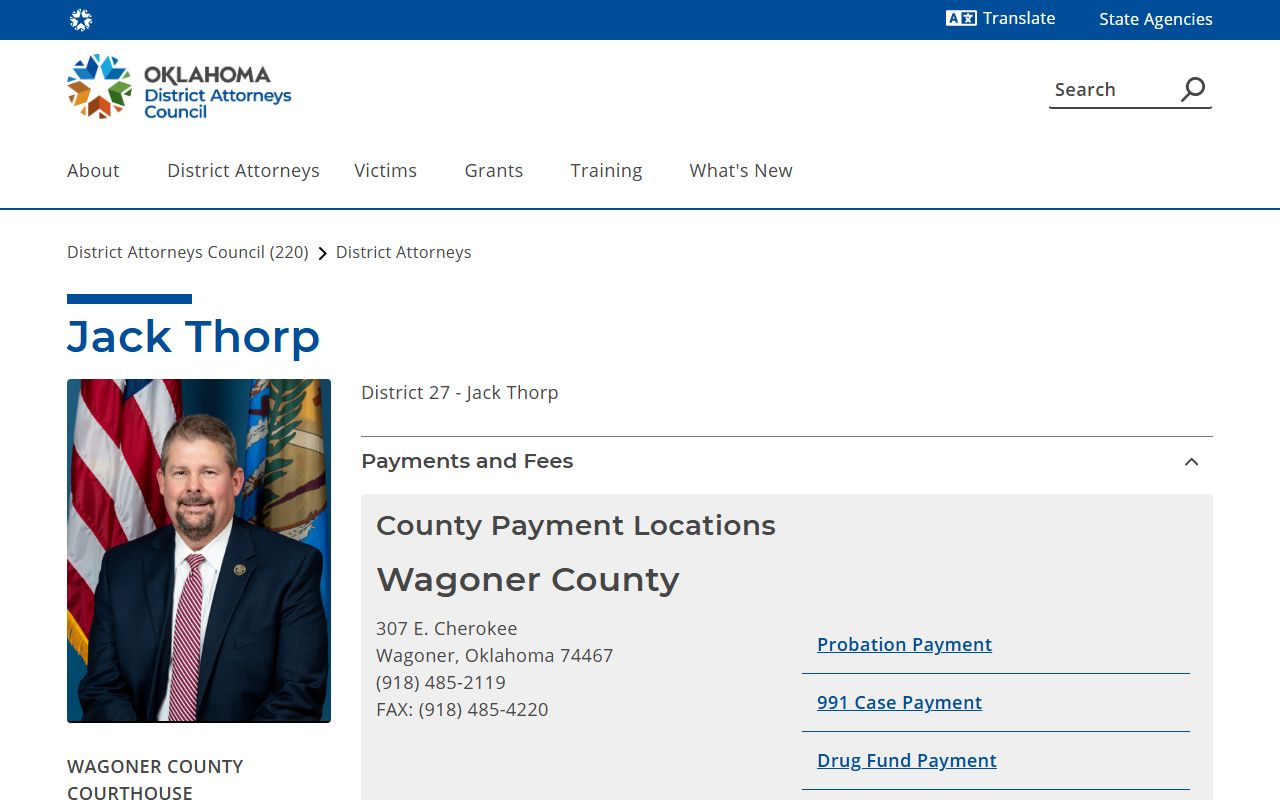
That council page is useful when you need to confirm which prosecutor's office handles a Sequoyah County criminal case rather than one from a neighboring county.
Specialty Court Programs in Sequoyah County
The District Court runs structured programs that work as alternatives to a standard sentence. Two are documented for Sequoyah County, and both operate out of offices on South Oak Street near the courthouse. These programs supervise certain defendants instead of sending them straight to incarceration.
Community Sentencing handles court-ordered structured supervision for eligible criminal cases. The county's Community Sentencing page lists Jennifer Kerr as the Supervising Officer, with District Judge Jeff Payton tied to the program. The office is at 102 S. Oak, Sallisaw, and is reached at 918-774-9044.
A judge may route a qualifying defendant into community sentencing so the person serves a supervised term in the county rather than a prison sentence.
The county also runs a Mental Health Court Coordination and court-ordered probation program. The official Mental Health page names Chrystal Schulz as the supervision officer and lists Associate District Judge Kyle Waters as the program judge, at the same 102 S. Oak address.
Mental health case records and medical details are not ordinary public records, so the program's files are restricted even though the office contact is public.
Sequoyah County District Court Offices and Contacts
The District Court operation runs out of the Sequoyah County Courthouse in Sallisaw. The courthouse holds the Court Clerk, the District Attorney, and county offices, so a single trip can cover docket lookups, copy requests, and prosecution questions. The clerk's counter is where official case files are pulled and certified copies are ordered.
Sequoyah County Courthouse
120 E. Chickasaw Ave., Suite 205
Sallisaw, OK 74955
Court Clerk: 918-775-4411
Hours: Mon-Fri 8:00 am to 4:00 pm, open noon
The Court Clerk records, files, and permanently maintains District Court proceedings, keeps the appearance, plaintiff and defendant, and journal dockets, and collects fines, fees, and court costs. The office stays accountable to the Oklahoma Court Administrator's Office and the Oklahoma Supreme Court. For older files, image-gated documents, or records not posted online, the clerk's office is the direct source.
Searching Sequoyah County District Court Cases
Most public District Court files are searchable online through two free statewide systems before any visit is needed. On Demand Court Records (ODCR) lists Sequoyah County in its court dropdown, and the Oklahoma State Courts Network (OSCN) carries Sequoyah County District Court as a court option. Both let you search by party name, case number, case type, and filing date.
You can search the docket by party name or by a full case number that begins with a category prefix such as CF for felony, CM for misdemeanor, CV for civil, FD for family, PB or PR for probate, SC for small claims, or TR for traffic. Detailed docket entries, hearings, and dispositions show in the Sequoyah County court dockets. Certified copies and files that are not online come from the Court Clerk.
When a Sequoyah County matter is actually a federal case, it is not in the county docket at all. Sequoyah County lies in the U.S. District Court for the Eastern District of Oklahoma, and federal criminal, civil rights, habeas, and Indian Country cases are searched through PACER rather than ODCR or OSCN. Federal appeals from the Eastern District go to the U.S. Court of Appeals for the Tenth Circuit. Keeping the county and federal systems straight saves a wasted search.