
About the Sequoyah County Court Clerk's Office
Melanie Edgmon serves as the Sequoyah County Court Clerk, the elected officer who safeguards the case records of the District Court. The office sits inside the county courthouse in Sallisaw and runs with a team of deputies. Brenda Smith works as First Deputy, Kristina Qualls as Second Deputy, and Tina McMurtry as Cost Administrator. Additional deputies include Larisia Bennett, Tara Webster, Taylor Fargo, Nicole Lattimore, and Laura Barnes, while Ashley Taylor serves as the Deputy and Traffic Clerk who handles citation matters.
The Court Clerk is not a freestanding office. It answers to the Oklahoma Court Administrator's Office and the Oklahoma Supreme Court, which set statewide rules for how case files, dockets, and court funds are managed. That chain of accountability keeps record-keeping consistent across all 77 counties. It also means the Sequoyah County Court Clerk follows the same filing standards a court in any other Oklahoma county would.
The official Sequoyah County Court Clerk page lists the staff, the duties, and the office hours, along with a direct link to the statewide court-record search. The page below pulls the contact details into one block.
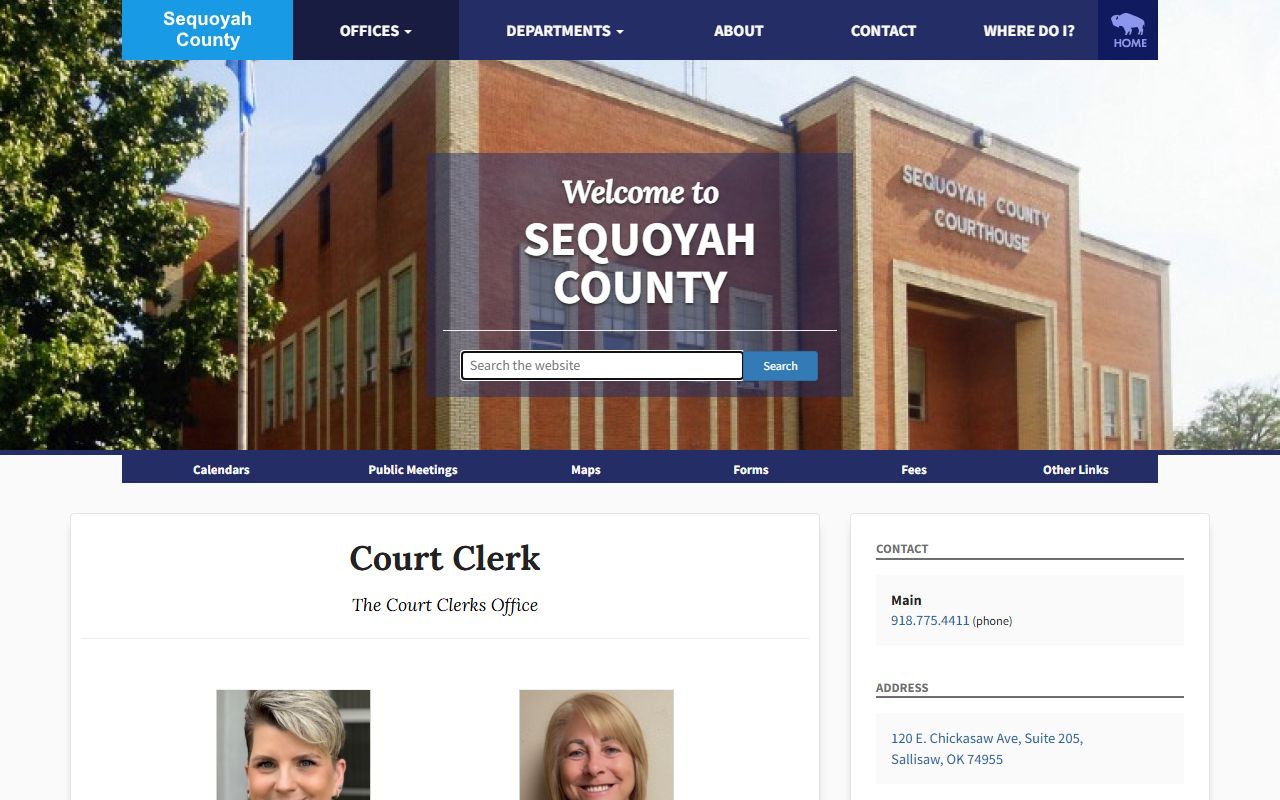
The screenshot shows the office directory the county publishes, where the clerk's roles and counter hours appear next to the court-record search link. Use it to confirm staff names and hours before a visit, since the county updates the page when deputies change.
Sequoyah County Court Clerk
Court Clerk: Melanie Edgmon
120 E. Chickasaw Ave., Suite 205
Sallisaw, OK 74955
918-775-4411
Hours: 8:00 am to 4:00 pm, open noon
What the Sequoyah County Court Clerk Does
The core job is record-keeping for the District Court. The Sequoyah County Court Clerk records, files, and permanently maintains the proceedings of every case the court hears. Staff accept new filings, stamp them, assign case numbers, and slot each document into the right case file. They also work with the civil, probate, juvenile, domestic relations, and small claims divisions so each type of case follows its own track.
Money flows through the office too. The clerk collects license fees, fines, and court costs, then deposits those funds into the court fund under state accounting rules. When a court reporter files a verbatim transcript, the office keeps that on record as well. The list below covers the duties the county names on its official page.
- Record, file, and permanently maintain District Court case proceedings.
- Maintain the appearance, plaintiff and defendant, and journal dockets.
- Support the civil, probate, juvenile, domestic relations, and small claims divisions.
- Keep filed verbatim transcripts from court reporters.
- Collect license fees, fines, and court costs and deposit them into the court fund.
- Issue certified copies of court documents on request.
Note: The Court Clerk keeps court case files, not land or property records, so deed and mortgage requests must go to the County Clerk instead.
Court Dockets Kept by the Sequoyah County Court Clerk
A docket is the running list of every event in a case. The Sequoyah County Court Clerk maintains three core dockets. The appearance docket logs each filing and order in date sequence. The plaintiff and defendant docket organizes entries by the parties to a case. The journal docket holds the formal written entries that memorialize a judge's rulings.
These dockets feed the public search systems. Free docket information for participating Oklahoma courts appears on On Demand Court Records, and the Oklahoma State Courts Network docket search lists Sequoyah County District Court as a court option. Both pull from the same District Court data the clerk records. For a deeper look at how to read daily filings and hearing entries, the Sequoyah County court dockets page walks through each field.
Older entries, sealed matters, and documents that were never scanned may not appear online. When that happens, the counter or a phone call to the office is the next step.
District Court Divisions the Court Clerk Serves
The clerk does not decide cases. Judges do that, while the office tracks and stores everything they file and order. The District Court the clerk serves is led by District Judge Jeffrey J. Payton, who also serves as Chief Judge for Sequoyah and Adair Counties, along with Associate District Judge Kyle E. Waters and Special Judge Matt Orendorff.
The county district judge page describes who presides over the court whose records the clerk maintains.
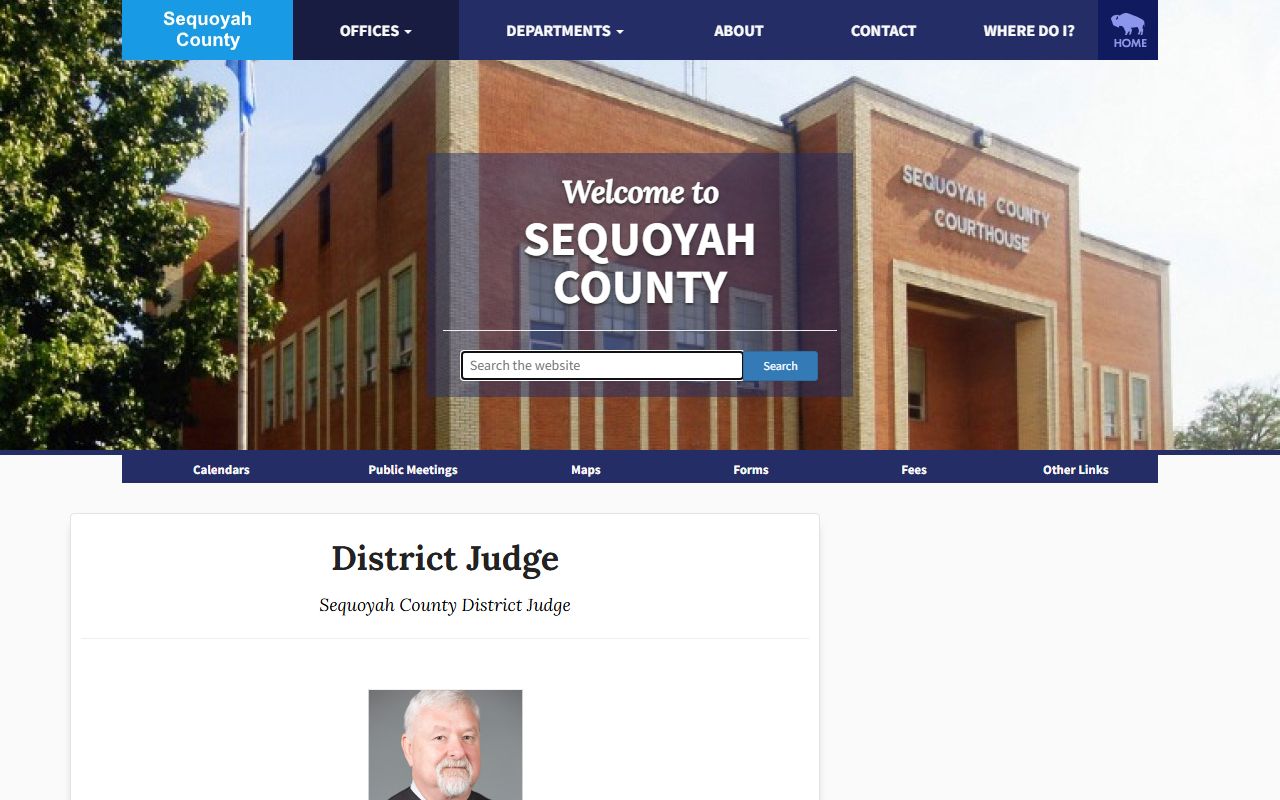
The page above profiles the bench of the 15th Judicial District, the court whose filings the clerk preserves. The office keeps separate divisions so each matter routes correctly.
- Civil cases over and under $10,000, plus small claims under $6,000.
- Criminal felony and misdemeanor cases and search warrants.
- Family and domestic matters, including divorce and protective orders.
- Probate, guardianship, conservatorship, and the filing of wills.
- Juvenile cases, many of which are confidential under state law.
- Traffic citations filed at the district level.
Paying the Sequoyah County Court Clerk
Fines, court costs, and fees can be paid through several channels. The county payment page lists in-person, mail, online, and phone options, each with its own accepted methods. The table sets out how each channel works so you can pick the one that fits your case.
| Channel | How it works |
|---|---|
| In person | Pay at the counter with cash, cashier's check, personal check, money order, debit or credit card, Visa, MasterCard, or American Express. |
| By mail | Send a cashier's check, personal check, or money order. Do not mail cash. |
| Online | Pay eligible court costs and traffic citations through ODCR. |
| By phone | Call 918-775-4411 and pay by debit or credit card, Visa, MasterCard, or American Express. |
The online channel has limits. Fully disposed traffic, felony, misdemeanor, and wildlife cases can be paid once they conclude with a conviction or final disposition. Undisposed traffic citations can be paid only after a guilty or nolo contendere plea is entered and on or before the initial appearance date. Civil cases, pending or appealed cases, and cases filed before January 1, 2005 cannot be paid through that portal.
How to Request a Certified Copy
A certified copy is a court document stamped and signed by the clerk to prove it is a true copy of the original. Courts, agencies, and many private parties require certified copies for legal use, while a plain printout from an online docket is not accepted as proof. The steps below outline how to obtain one from the office.
- Identify the case using ODCR or OSCN, or call the office for the correct case number.
- Decide which documents you need and how many certified copies of each.
- Submit the request at the Court Clerk counter, or send it by mail with the case details and your return address.
- Pay the certification and copy charges by an accepted method, and confirm the exact amount at 918-775-4411.
- Collect the certified copy at the counter, or wait for it to arrive by mail.
Note: Exact certification and copy charges are not published in county sources, so confirm current amounts with the Court Clerk before you submit a request.
Records Request Form Fields
A clean request reaches the right file faster. Whether the office uses a printed form or takes the details at the counter, staff need the same basic information to locate and certify a document. The table lists the fields a typical request should include.
| Field | Required | Notes |
|---|---|---|
| Case Number | Helpful | Speeds the search; find it on ODCR or OSCN, or ask staff to look it up. |
| Party Names | Yes | Give each party in last, first format when no case number is known. |
| Document Type | Yes | Name the document, such as a decree, judgment, order, or petition. |
| Number of Copies | Yes | Each certified copy is charged separately. |
| Requester Contact | Yes | Provide your name, phone, and mailing address for return delivery. |
Court Clerk vs County Clerk in Sequoyah County
Two different clerks serve the county, and people often confuse them. The Court Clerk, Melanie Edgmon, keeps District Court case records. The County Clerk, Julie Haywood, is the county recorder for land and property documents. They sit in the same courthouse but handle entirely separate records.
Send court matters to the Court Clerk. That covers civil suits, criminal cases, divorces, probate, guardianships, small claims, traffic citations, marriage licenses, and certified copies of any of those filings. Send recorded-document matters to the Sequoyah County Clerk. That office records deeds, mortgages, mineral interests, plats, liens, tax liens, and military discharge papers, and it handles county financial and board records.
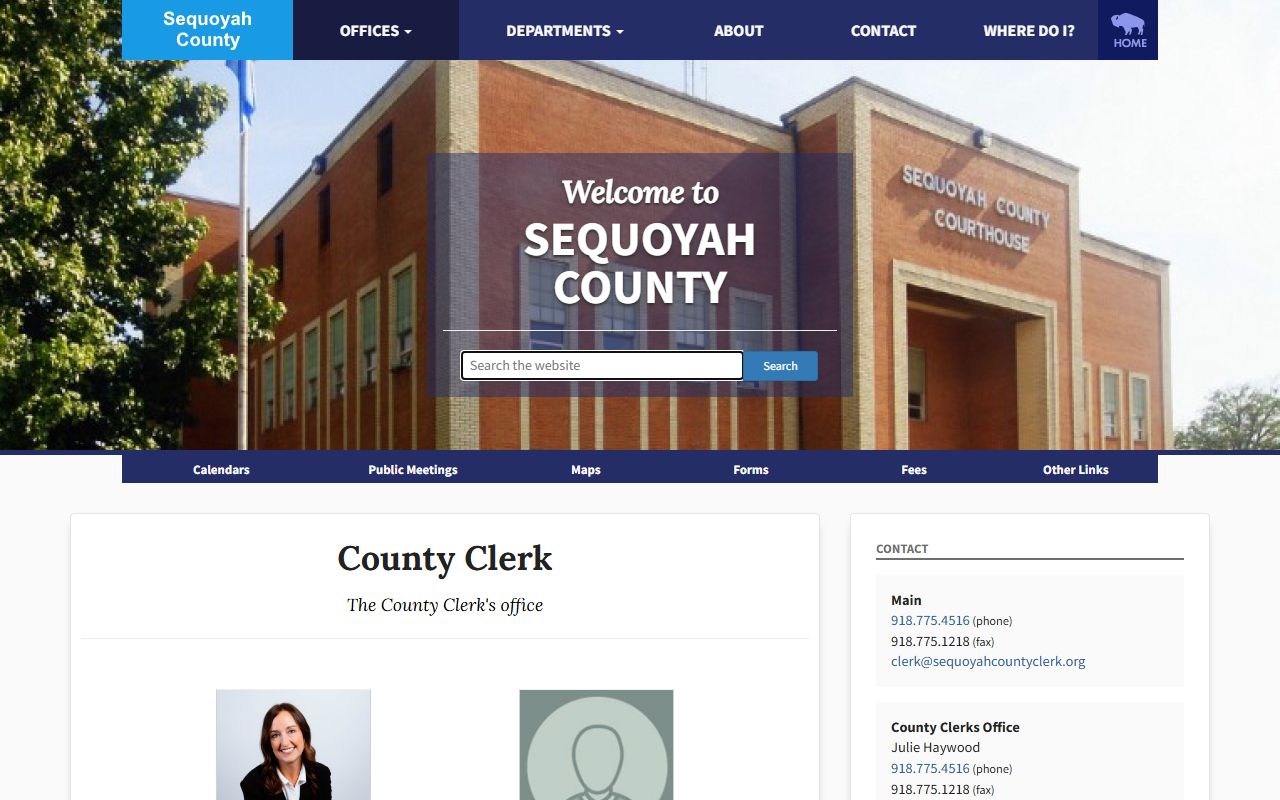
The County Clerk page shown above lays out the recorder duties that do not belong to the Court Clerk. If a request involves a deed, a lien, or a property title, it goes to the County Clerk, not the office described here.
E-Filing and the Sequoyah County Court Clerk
Oklahoma district courts file cases electronically through the Oklahoma Unified Case Management System. Attorneys and registered users submit documents at the state e-filing portal, which routes filings into the same case files the Court Clerk maintains. Electronic filing speeds intake but does not replace the clerk's role as the keeper of the official record.
For searching rather than filing, ODCR and OSCN remain the free public front doors to Sequoyah County District Court data. When a record is missing online, gated behind a paid image plan, sealed, or too old to be indexed, the office at the courthouse is the fallback. A call to 918-775-4411 confirms what is on file and what a certified copy will cost.